


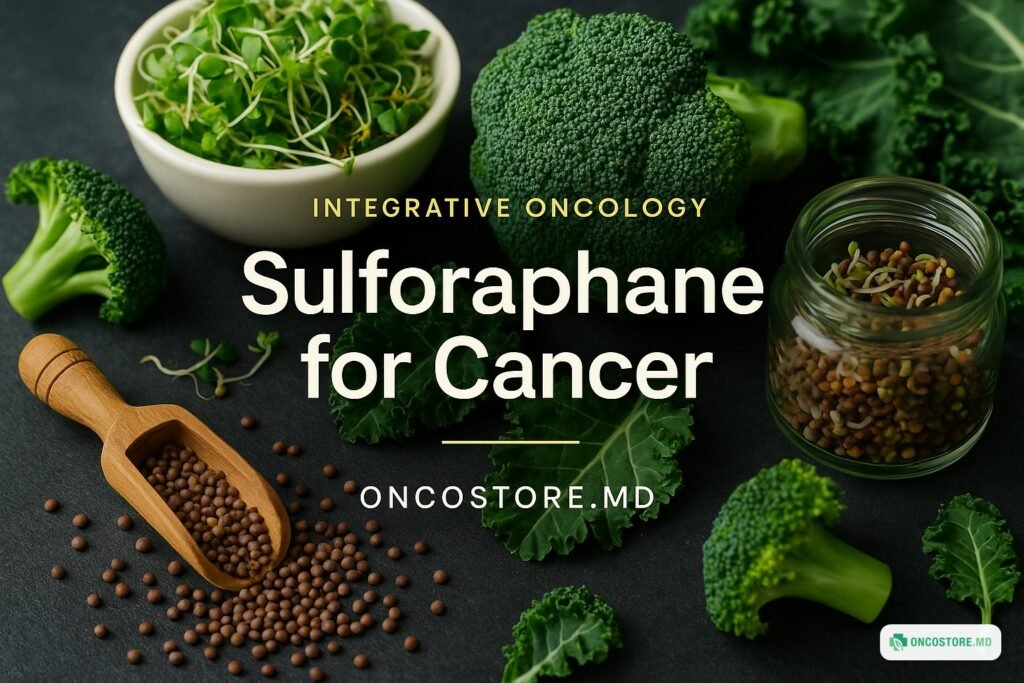
Sulforaphane — the bitter-tasting isothiocyanate that gives broccoli sprouts their characteristic sharpness — is widely regarded as one of the most potent naturally-occurring chemopreventive compounds known to science.
From upregulating the body’s master antioxidant defense (Nrf2 pathway) to inducing apoptosis in cancer cells, sulforaphane’s mechanisms read like a wishlist for cancer prevention. This guide covers the science, evidence, and how to actually get clinically meaningful amounts.
What Is Sulforaphane?
Sulforaphane is an organosulfur isothiocyanate produced when the precursor compound glucoraphanin is acted upon by the enzyme myrosinase. This conversion happens when broccoli (or similar cruciferous plant) tissue is broken — chewing, chopping, or freezing.
The richest source is broccoli sprouts (3–7 day old) — containing 20–100× more glucoraphanin than mature broccoli.
How Sulforaphane Acts Against Cancer
Sulforaphane operates through several powerful mechanisms:
- Nrf2 activation: upregulates the body’s master antioxidant and detoxification system, neutralizing carcinogens before they damage DNA
- Phase 2 detox enzyme induction: increases glutathione-S-transferase, NQO1, and other carcinogen-clearing enzymes
- Apoptosis induction: triggers cell death in damaged or precancerous cells
- Cell cycle arrest: halts proliferation in G2/M phase
- Anti-angiogenesis: reduces VEGF
- HDAC inhibition: epigenetic modulation that reactivates tumor suppressors
- Stem cell modulation: targets cancer stem cells (CSCs) — often missed by chemotherapy
- Anti-Helicobacter pylori: reduces stomach cancer risk by clearing this carcinogenic infection
Evidence Across Cancer Types
- Breast cancer: reduces estrogen activity in normal-risk women; targets breast cancer stem cells
- Prostate cancer: 200 µmol/day broccoli sprout extract slowed PSA rise in men with biochemical recurrence
- Colorectal cancer: protective in observational studies of cruciferous-rich diets
- Lung cancer: ongoing trials in smokers and high-risk individuals
- Bladder cancer: reduced recurrence in observational studies
- Stomach cancer: sulforaphane suppresses H. pylori — reducing gastric cancer risk
- Skin cancer: reduces UV-induced damage when applied topically or orally
Best Food Sources
- Broccoli sprouts (3–4 days old): 50–100 mg/100 g — by far the highest source
- Broccoli (mature): 5–10 mg/100 g
- Brussels sprouts: 5–10 mg/100 g
- Cauliflower: 2–5 mg/100 g
- Kale and cabbage: 2–5 mg/100 g
- Watercress, arugula, mustard greens: moderate amounts
Eating 100 g of broccoli sprouts daily provides clinically meaningful doses. Many people grow their own at home cheaply.
How to Maximize Sulforaphane Intake
- Chew thoroughly: activates myrosinase enzyme
- Chop and wait 40 minutes: before cooking — allows full conversion
- Lightly steam (1–3 min) — don’t boil: heat above 70°C destroys myrosinase
- Add raw mustard, radish or daikon: these provide additional myrosinase if cooking
- Combine with broccoli sprouts: highest source by far
Sulforaphane Supplements
Supplement forms vary widely in quality:
- Glucoraphanin + myrosinase: the gold standard — both ingredients allow body to produce sulforaphane
- Stabilized sulforaphane: direct active compound, more expensive
- Avoid ‘broccoli powder’: usually has minimal sulforaphane unless myrosinase is preserved
- Avocado/orange juice taken with supplement: may enhance absorption
Trusted brands: Avmacol, Prostaphane, BroccoMax. Look for verified sulforaphane yield.
Dosage Guidelines
- General prevention: 30–50 mg sulforaphane equivalent daily
- Active intervention: 100–200 µmol (≈18–36 mg) daily under medical supervision
- From sprouts: 50–100 g of fresh sprouts daily
- Maintenance: 3–4 servings of cruciferous vegetables weekly + sprouts most days
Safety and Considerations
Sulforaphane is well tolerated. Considerations:
- Mild GI upset at high supplement doses
- Potential thyroid impact at very high cruciferous intake (theoretical — eat selenium-rich foods to balance)
- May modify drug metabolism via Nrf2 — discuss with oncologist if on chemo
- Avoid high-dose supplements during pregnancy without medical advice
Frequently Asked Questions
Are broccoli sprouts really better than cooked broccoli?
Yes — sprouts contain 20–100× more glucoraphanin than mature broccoli, and are eaten raw, preserving myrosinase. They are by far the best dietary source.
Does cooking destroy sulforaphane?
Boiling and prolonged high-heat cooking destroys myrosinase and reduces sulforaphane. Light steaming (1–3 minutes) preserves most activity.
Can I take sulforaphane during chemotherapy?
Most evidence is favorable, but Nrf2 pathway modulation can theoretically affect chemotherapy effects in some scenarios. Coordinate with your oncologist.
How much do I need from supplements?
30–50 mg sulforaphane equivalent daily is a reasonable preventive dose. Active interventions use higher amounts under medical supervision.
Are there safety concerns with daily cruciferous intake?
Standard dietary amounts are safe and beneficial. Very high cruciferous diets paired with low iodine intake may theoretically affect thyroid; ensure adequate iodine and selenium.
Disclaimer: This article is for educational purposes only. Always consult a qualified healthcare professional before starting any prescription medication or supplement.
What Our Customers Are Saying
Real stories from people just like you. Don’t take our word — read theirs.
“Growing my own sprouts daily for two years. CRP and oxidative stress markers consistently lower than baseline. Cheap, effective, evidence-based.”
“PSA velocity slowed dramatically after starting sulforaphane (Avmacol). My urologist took notice. Three years on active surveillance.”
“Sulforaphane is foundational in my prevention protocols. Few supplements have such consistent evidence. Sprouts daily, supplement when convenience demands it.”
“Started for liver detox support. Energy improved within 4 weeks. Skin clearer too. Pleasant surprise.”
“After H. pylori treatment, added sulforaphane sprouts for stomach lining recovery. Symptoms resolved faster than expected.”