



Berberine — a bright yellow plant alkaloid in goldenseal, barberry, Oregon grape and coptis — has long been used in traditional Chinese and Ayurvedic medicine. Modern research has confirmed potent metabolic effects (often compared to metformin) and increasingly recognizes berberine’s anti-cancer activity across multiple tumor types.
This guide reviews berberine’s mechanisms, the cancer-specific evidence, dosage, the bioavailability problem, and how to safely integrate it into a comprehensive plan.
What Is Berberine?
Berberine is an isoquinoline alkaloid with a 3,000-year history in traditional medicine for digestive issues, infections and metabolic disorders. Modern interest exploded after studies showed berberine can:
- Lower blood glucose comparably to metformin
- Reduce LDL cholesterol
- Improve insulin sensitivity
- Activate AMPK (cellular energy regulator)
The same AMPK pathway that improves metabolism also has profound effects on cancer cell biology.
How Berberine Acts Against Cancer
Berberine’s anti-tumor effects involve multiple parallel pathways:
- AMPK activation: shifts cells away from glycolytic metabolism that fuels tumor growth (the Warburg effect)
- Anti-proliferation: arrests cell cycle in G1 and G2/M phases
- Apoptosis: activates intrinsic mitochondrial cell-death pathway
- Anti-angiogenesis: inhibits VEGF and HIF-1α
- Anti-metastasis: reduces matrix metalloproteinase activity
- Reverses chemo resistance: in some multi-drug-resistant cell lines
- Modulates gut microbiome — relevant to colon cancer
- Inhibits NF-κB chronic inflammation
Evidence Across Cancer Types
- Colorectal cancer: Phase 2/3 trial showed berberine reduced colorectal adenoma recurrence by 23% over 2 years
- Breast cancer: robust preclinical apoptosis induction in ER+ and TNBC cell lines
- Hepatocellular carcinoma: tumor growth inhibition in animal models, sensitization to sorafenib
- Lung cancer: reduced metastasis in mouse models
- Prostate cancer: AR (androgen receptor) signaling inhibition in cell lines
- Leukemia: apoptosis induction in CML cell lines
- Pancreatic cancer: tumor growth suppression in xenograft models
The Metabolic-Cancer Connection
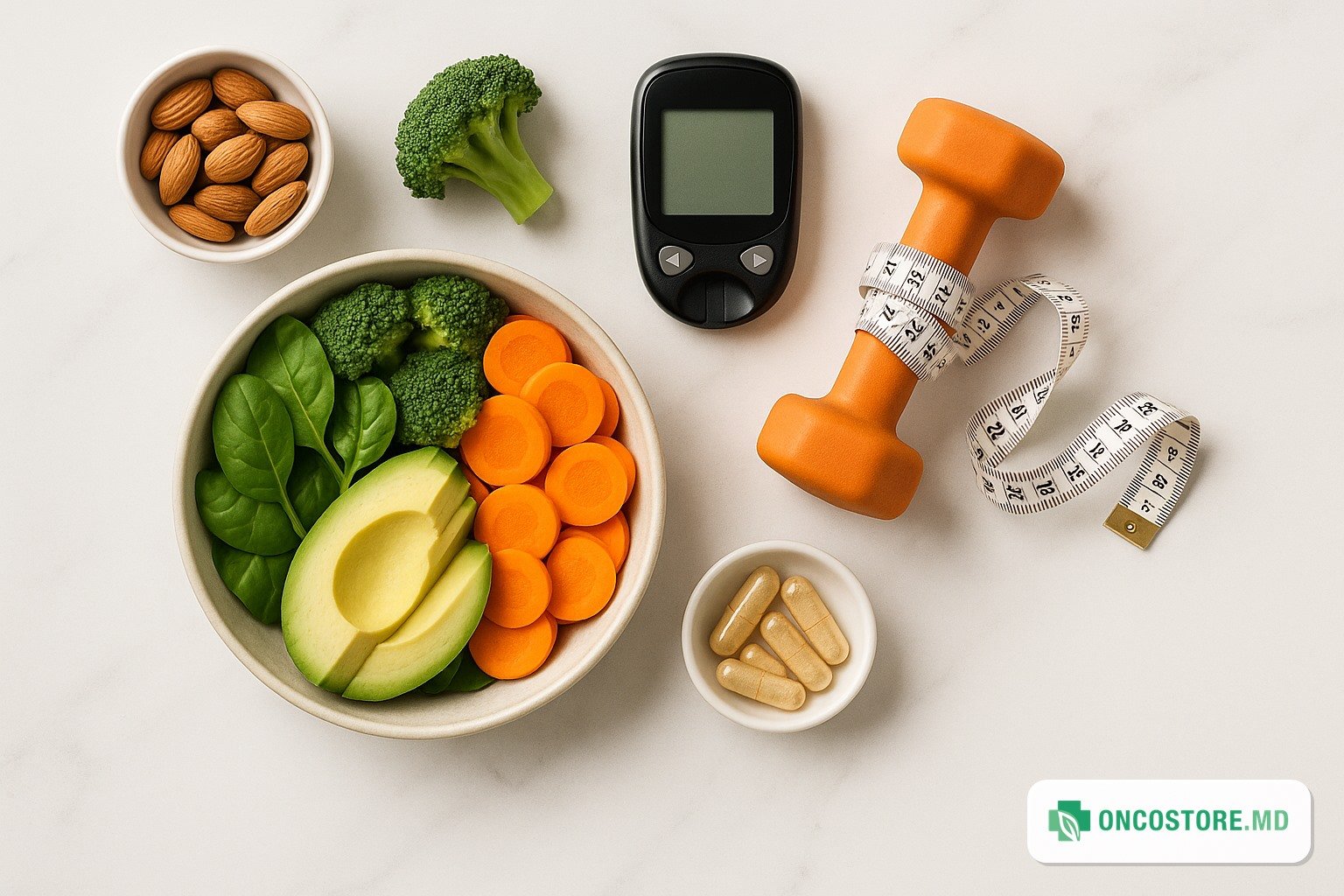
Hyperinsulinemia and insulin resistance are increasingly recognized as cancer drivers — particularly in breast, colon, prostate and pancreatic cancers. Berberine’s metabolic effects are therefore doubly relevant:
- Lower blood glucose (less fuel for glycolytic tumors)
- Reduced insulin (a growth factor for many cancers)
- Reduced systemic inflammation
- Improved gut microbiome (linked to colorectal cancer prevention)
For metabolic syndrome patients with elevated cancer risk, berberine has become a popular foundational supplement.
Berberine Dosage Guidelines
- Metabolic support: 500 mg, 2–3 times daily with meals
- Cancer adjunct: 1,000–1,500 mg/day in divided doses, under medical supervision
- Bioavailability: oral berberine is <5% absorbed; modern dihydroberberine (DHB) is up to 5× more bioavailable at half the dose
- With milk thistle (silymarin): some formulas combine the two for enhanced absorption
Always take with food to reduce GI side effects.
Safety, Side Effects and Interactions
Berberine is generally safe but has notable interactions:
- GI side effects: mild diarrhea, cramping (start at low dose, build up)
- Hypoglycemia risk: caution if also on metformin or insulin
- CYP3A4 inhibitor: can affect drug metabolism (statins, immunosuppressants, certain chemo drugs)
- Pregnancy: contraindicated
- Newborns and infants: not recommended (kernicterus risk)
- P-glycoprotein modulation: may affect drug efflux pumps — relevant in chemotherapy
Always coordinate with your oncologist and pharmacist before starting berberine, especially during active treatment.
Frequently Asked Questions
Is berberine like ‘natural metformin’?
Berberine and metformin both activate AMPK and improve insulin sensitivity. Berberine has additional direct anti-cancer mechanisms metformin doesn’t share. Some patients use both under medical guidance.
Can I take berberine during chemotherapy?
Possibly, but with caution. Berberine inhibits CYP3A4 and P-gp — both relevant to chemotherapy metabolism. Always coordinate with your oncologist before starting.
How long until I notice metabolic benefits?
Blood glucose changes within 2–4 weeks. Cholesterol shifts in 6–12 weeks. Cancer-relevant changes are typically observed over 3–6 months of consistent use.
Dihydroberberine vs regular berberine — which is better?
Dihydroberberine (DHB) has 5× higher bioavailability and fewer GI side effects. For most users, DHB at half the dose matches or exceeds regular berberine.
Does berberine cause liver problems?
At standard doses berberine is generally liver-friendly. Very high doses or poor-quality products may stress the liver. Stick to reputable brands and recommended doses.
Disclaimer: This article is for educational purposes only. Always consult a qualified healthcare professional before starting any prescription medication or supplement.
What Our Customers Are Saying
Real stories from people just like you. Don’t take our word — read theirs.
“HbA1c down from 7.2 to 5.9, weight down 6 kg, on stable PSA in active surveillance. Berberine plus lifestyle — meaningful results.”
“Berberine is part of my standard metabolic-syndrome and prevention toolkit. Reliable, well-tolerated, evidence-supported.”
“Switched to dihydroberberine — no GI issues, half the dose. Energy and blood sugar both improved.”
“After multiple polyp removals, my GI specialist suggested adding berberine. Two years on — clean colonoscopies. Cautiously optimistic.”
“Combined formula with milk thistle. Cholesterol and liver enzymes both improved. Daily supplement worth keeping.”