


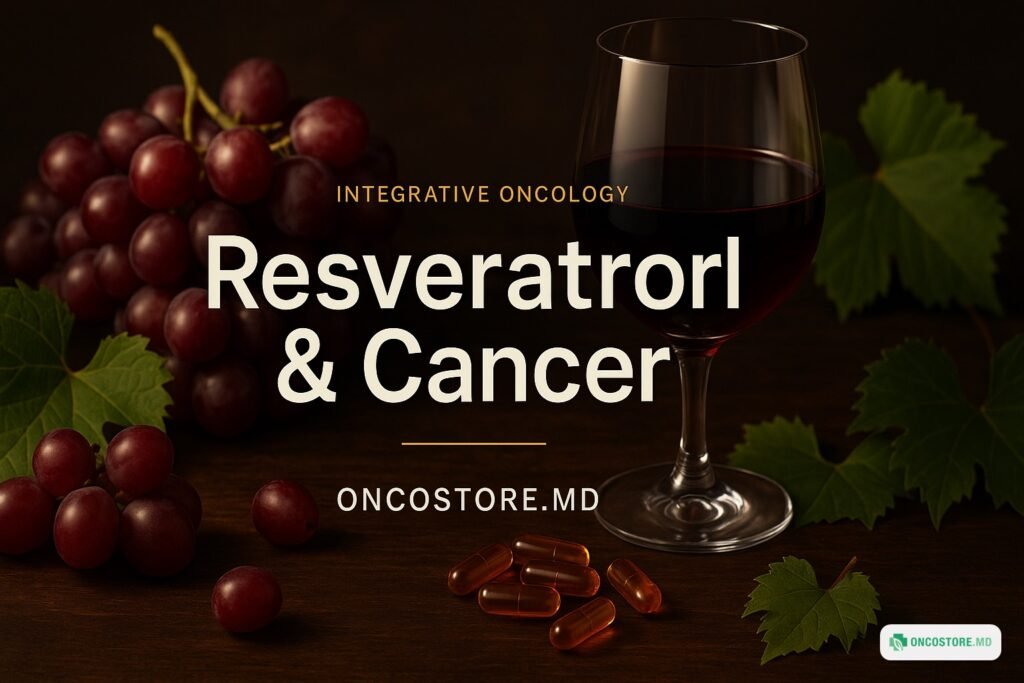
Resveratrol, the polyphenol famous for the ‘French Paradox,’ has been one of the most heavily promoted — and most heavily studied — anti-cancer nutraceuticals of the past two decades. From sirtuin activation and mitochondrial support to direct anti-tumor effects, the lab evidence is intriguing.
But what does the latest research actually show? This guide separates hype from evidence — covering the biology, clinical trials, dosage, and how to choose a quality resveratrol supplement.
What Is Resveratrol?
Resveratrol is a stilbenoid polyphenol produced by plants in response to stress, fungal infection or UV exposure. It’s most concentrated in:
- Skins of red grapes
- Japanese knotweed (Polygonum cuspidatum) — main commercial source
- Berries (blueberries, cranberries, mulberries)
- Peanuts and pistachios in small amounts
Two forms exist: trans-resveratrol (the active form) and cis-resveratrol. Quality supplements specify ≥98% trans-resveratrol.
Anti-Cancer Mechanisms of Resveratrol
Resveratrol affects cancer biology at multiple levels:
- Sirtuin activation: activates SIRT1, regulating DNA repair and metabolism
- Anti-proliferation: arrests cancer cells in G1/S and S phases
- Apoptosis: induces cell death via p53 and Bax pathways
- Anti-inflammatory: blocks COX-2 and NF-κB
- Anti-angiogenesis: inhibits tumor blood supply growth
- Anti-metastasis: down-regulates EMT (epithelial-mesenchymal transition)
- Antioxidant: scavenges reactive oxygen species protecting healthy DNA
What the Clinical Evidence Shows
Human evidence is more modest than the lab work suggests. Trials so far:
- Colorectal cancer: 0.5–1 g/day reduced tumor cell proliferation in patient biopsies
- Multiple myeloma: Phase 2 trial used 5g/day; some response signals but renal toxicity at high doses
- Breast cancer: reductions in inflammatory markers and breast density on screening
- Pancreatic cancer: ongoing investigation in chemo-sensitization protocols
Limitations: bioavailability is poor (similar to curcumin/quercetin), and human doses to match animal results are very high.
The Bioavailability Issue
Trans-resveratrol is rapidly metabolized — only 1–2% reaches the bloodstream as the active molecule. Solutions:
- Liposomal resveratrol: 5–10× higher absorption
- Resveratrol + piperine: reduces hepatic clearance
- Pterostilbene (related compound): longer half-life, more orally bioavailable
- Resveratrol + quercetin: quercetin slows resveratrol metabolism
Dosage Guidelines
- General longevity/cardiovascular: 100–500 mg daily
- Inflammation/joint health: 250–500 mg twice daily
- Integrative oncology: 500–1,500 mg/day under medical supervision
- Liposomal forms: often half the dose of standard powder
Take with a fatty meal for best absorption.
Resveratrol from Food and Wine
Red wine has resveratrol — about 0.2–2 mg per glass. To match a 200 mg supplement, you’d need 100+ glasses of wine, which is obviously impractical and harmful. Diet alone supplies very low therapeutic amounts. For meaningful effects, supplements are needed.
Safety, Side Effects and Cautions
At standard doses (≤500 mg/day) resveratrol is well tolerated. Considerations:
- High doses (≥2 g/day) may cause GI upset, headaches, or kidney stress
- Modest antiplatelet effect — caution with blood thinners
- Inhibits CYP3A4 — affects drug metabolism (statins, immunosuppressants)
- Has weak estrogenic activity — consult your oncologist if you have hormone-sensitive cancer
- Avoid in pregnancy without medical advice
Frequently Asked Questions
Does drinking red wine give me enough resveratrol?
No. The amount in wine is far below therapeutic doses, and the alcohol negates many benefits. Supplements are the practical way to obtain meaningful amounts.
What’s the difference between resveratrol and pterostilbene?
Pterostilbene is structurally similar but more bioavailable and longer-lasting in the body. Some products combine both for synergistic effects.
Can I take resveratrol with hormone-sensitive cancer?
Resveratrol has both estrogenic and anti-estrogenic actions. The clinical effect varies. Always discuss with your oncologist before using it with breast, prostate, or ovarian cancer.
How long until I notice effects?
Subtle anti-inflammatory effects: 4–8 weeks. Cardiovascular markers: 8–12 weeks. For oncology adjunct purposes, expect months of consistent use.
Trans-resveratrol vs regular resveratrol — does it matter?
Yes. Trans-resveratrol is the biologically active form. Quality supplements should specify ≥98% trans-resveratrol content.
Disclaimer: This article is for educational purposes only. Always consult a qualified healthcare professional before starting any prescription medication or supplement.
What Our Customers Are Saying
Real stories from people just like you. Don’t take our word — read theirs.
“Started after my cardiologist mentioned the SIRT1 evidence. Energy, sleep and HsCRP all improved over four months. I take it with quercetin.”
“Five years post-treatment. Resveratrol is part of my prevention protocol. My oncologist keeps an eye on it but supports the choice.”
“Three years on liposomal resveratrol. Cholesterol panel best in two decades. Whether it’s resveratrol or lifestyle — won’t risk stopping now.”
“Evidence is mixed in humans, but at sensible doses it’s safe. I include it in many of my prevention protocols alongside vitamin D, omega-3 and curcumin.”
“The combo was a step up from plain resveratrol. Sustained energy, fewer afternoon crashes.”