


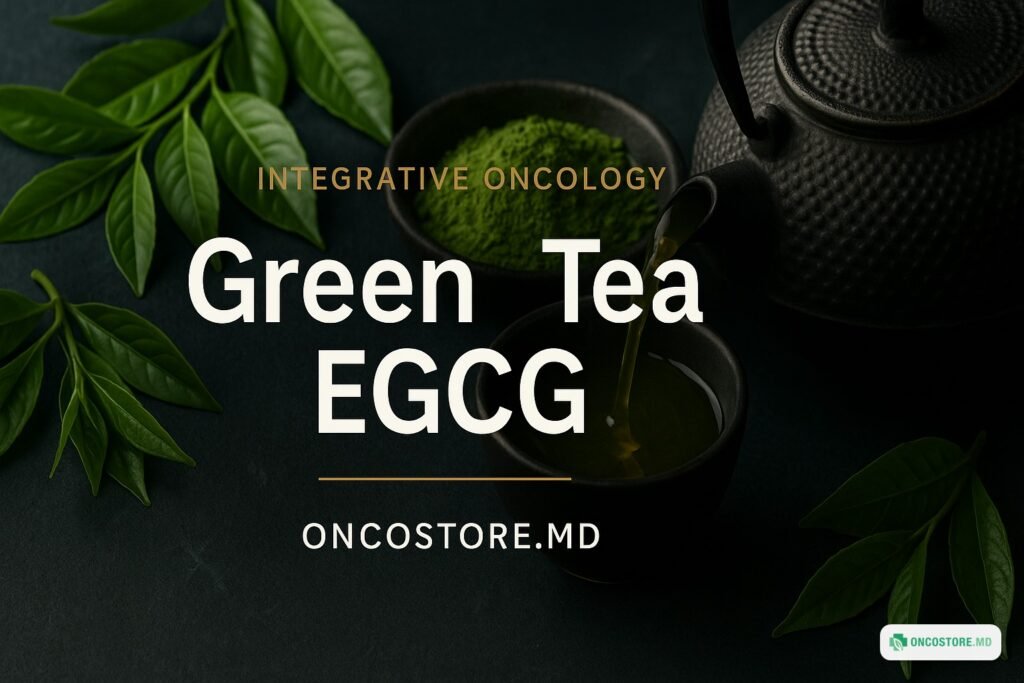
Epigallocatechin gallate (EGCG) is the major catechin in green tea and one of the most studied chemopreventive polyphenols in cancer research. Population studies link regular green tea consumption to reduced risk of breast, prostate, colorectal, lung and ovarian cancers.
Beyond prevention, EGCG is increasingly used as an adjunct in integrative oncology for its antioxidant, anti-angiogenic, and chemo-sensitizing properties. This guide covers the science, dosage, formulations, and key safety considerations.
What Is EGCG?
EGCG is a flavonoid catechin that makes up ~50% of green tea polyphenols. Brewed green tea contains 200–400 mg total catechins per cup, of which 50–100 mg is EGCG.
EGCG’s molecular structure makes it a powerful antioxidant — up to 100× more potent than vitamin C in some assays — and gives it the ability to bind and modulate dozens of cancer-related proteins.
How EGCG Acts Against Cancer
EGCG has been shown to:
- Block cancer cell proliferation by inhibiting EGFR (epidermal growth factor receptor)
- Induce apoptosis in tumor cells via p53 and Fas pathways
- Suppress angiogenesis by inhibiting VEGF
- Inhibit metastasis via reduced MMP-2 and MMP-9 activity
- Modulate epigenetics by inhibiting DNMT and HDAC enzymes — re-activating tumor suppressor genes
- Sensitize tumors to chemotherapy in some models
- Antioxidant defense protecting healthy DNA from oxidative damage
Evidence Across Cancer Types
- Prostate cancer: men with high-grade PIN given 600 mg EGCG daily had 90% lower progression to cancer over 1 year
- Breast cancer: green tea drinkers had 12% reduction in breast cancer risk in meta-analysis
- Colorectal cancer: protective in both observational studies and animal models
- Cervical dysplasia: topical and oral EGCG induced regression in some patients with HPV lesions
- Bladder cancer: reduced recurrence in observational studies of green tea drinkers
- Lung cancer: chemopreventive in heavy smokers with elevated risk
EGCG Supplement Forms
- Standardized green tea extract: usually 50–60% EGCG by weight
- Pure EGCG isolates: 95–98% EGCG, used in clinical research
- Decaffeinated extracts: for those sensitive to caffeine
- Green tea + EGCG capsules with piperine for absorption
- Polyphenon E: a clinical-grade defined green tea extract used in oncology trials
Dosage and How to Take
- General prevention: 200–400 mg EGCG daily
- Cancer prevention/active intervention: 600–800 mg EGCG daily, divided
- From tea alone: 4–6 cups of brewed green tea provide ~300–400 mg EGCG
Take with food to reduce GI upset and the small risk of liver stress. Avoid taking on empty stomach in high doses.
Safety: The Liver Concern
EGCG has been linked to rare but serious liver toxicity at very high concentrated supplement doses (≥800 mg/day on empty stomach). To stay safe:
- Take with food, not empty stomach
- Stay below 800 mg/day from supplements
- Drinking brewed tea has a much better safety profile
- Avoid combining with hepatotoxic medications
- Discontinue if any symptoms of liver stress appear (jaundice, dark urine, fatigue)
Other interactions:
- May reduce iron absorption — separate by 2 hours
- Caffeine content can affect sleep and blood pressure
- Mild blood-thinning effect
Frequently Asked Questions
Can I just drink green tea instead of taking EGCG supplements?
Drinking 4–6 cups of brewed green tea daily provides clinically meaningful EGCG with a strong safety profile. For higher therapeutic doses, supplements are an option but require care with liver safety.
Is EGCG safe with chemotherapy?
EGCG can interact with bortezomib (Velcade) and certain other cancer drugs. Always coordinate with your oncologist before adding it during active treatment.
Should I choose decaf green tea extract?
If you’re sensitive to caffeine or take it later in the day, yes. The EGCG content is preserved in quality decaffeinated extracts.
How long until benefits show?
Cardiovascular and inflammatory markers: 4–8 weeks. Cancer prevention effects are observed over months and years of consistent use.
Can EGCG replace cancer treatment?
No. EGCG is a complementary nutrient with prevention and adjunct use. It does not replace evidence-based oncology treatment.
Disclaimer: This article is for educational purposes only. Always consult a qualified healthcare professional before starting any prescription medication or supplement.
What Our Customers Are Saying
Real stories from people just like you. Don’t take our word — read theirs.
“Switched from coffee to 4 cups of green tea daily. Cleaner energy, better skin, lower blood pressure at my last check-up.”
“PSA stable for two years on active surveillance. EGCG, lifestyle, weight loss — I credit the combination.”
“EGCG is foundational in many of my patient protocols. I prefer brewed tea over high-dose supplements unless there’s a specific clinical reason.”
“Following recent research on EGCG and breast density. Three months in — too early to tell, but feeling well.”
“Used clinical-grade EGCG during my cervical dysplasia regression. Combined with my naturopath’s protocol — pap returned to normal.”